
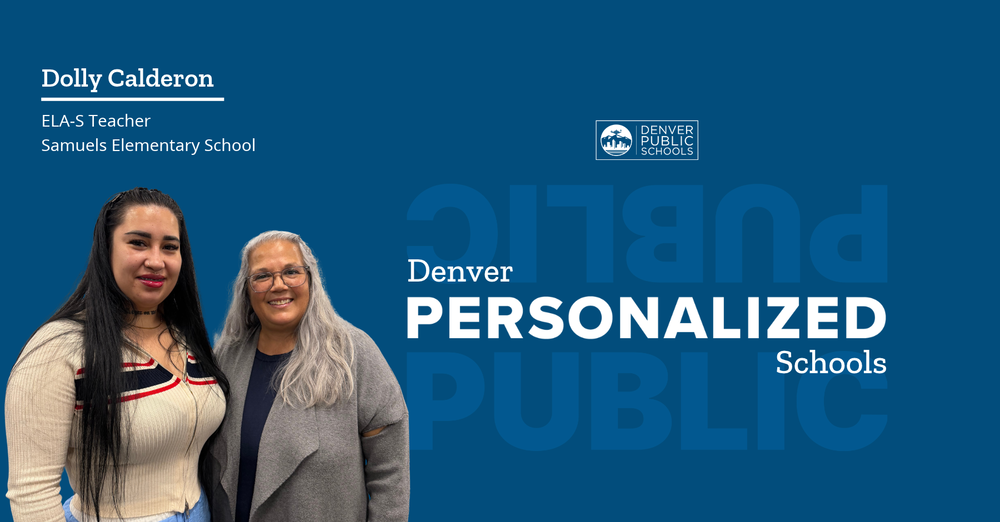
For Samuels Elementary School ELA-S teacher Dolly Caderon, a personalized education starts in the home. She has been visiting DPS families in their homes for over two decades, sometimes sharing a meal like tamales and pozole to break the ice and build trust.
“That relationship piece is very, very important. And students see that you are coming into their home, being a little more engaged. And so students feel comfortable too,” Dolly said.
Dolly was among the earliest participants and biggest champions of the Parent Teacher Home Visit Program through Denver Public Schools’ Department of Family and Community Engagement (FACE). Since 2010 the program has expanded to over 100 DPS schools, with educators and families participating in over 6,000 visits each school year.
Each year, Dolly offers home visits to the families of every student in her ELA-S second grade class at Samuels. The program is voluntary, and may also take place in a park or location outside the home if the family prefers. There are two visits each school year, one in the fall and one in the spring.
Unlike a parent-teacher conference, the goal of the first visit is to get to know the families. Dolly believes it’s important to understand the students’ home lives and the resources they may be lacking. She frequently connects families to support services within FACE. She also uses the initial visits to ask parents or caregivers about their hopes and dreams for their student. A second visit toward the end of the year focuses on academic progress as the student prepares to advance to the next grade level.
Dolly says it can be challenging to conduct home visits with parents or caregivers who are more quiet and reserved, but she doesn’t let that become an obstacle to making a connection. She feels it’s her responsibility to ask the right questions, avoid invasive questions, and relate to them on a personal level. This has been particularly helpful for Latine families.
"When sharing my own personal experience coming from El Salvador at seven years old, it becomes a relatable experience and that gives them hope and relief that their students can also succeed just like I did,” Dolly said.
Samuels parent Adriana Sánchez Giraldo participated in home visits with Dolly when her son was in second grade and continues to maintain a connection. The fact that both Dolly and Adriana speak Spanish made it easier to connect.
“Porque hay un espacio más personalizado, ya puedes tocar algunos temas que, digamos, en la reunión no vas a poder hacer,” Adriana said in Spanish, explaining that the more personalized setting allows parents to bring up topics they wouldn't be able to in a regular parent-teacher conference.
The ultimate goal of the program is to promote academic success for students, and Dolly has seen students who participate in home visits engaging more in class. Ultimately, the home visits are a way to make sure the entire family is invested in their student’s education.
“I see these parents and talk to them and make sure that we know what they need in order for us to help them. So I think that the most important thing is that it does help.
It does help increase attendance. It does help that your kids become more engaged in the things that we want them to be doing,” Dolly said.