
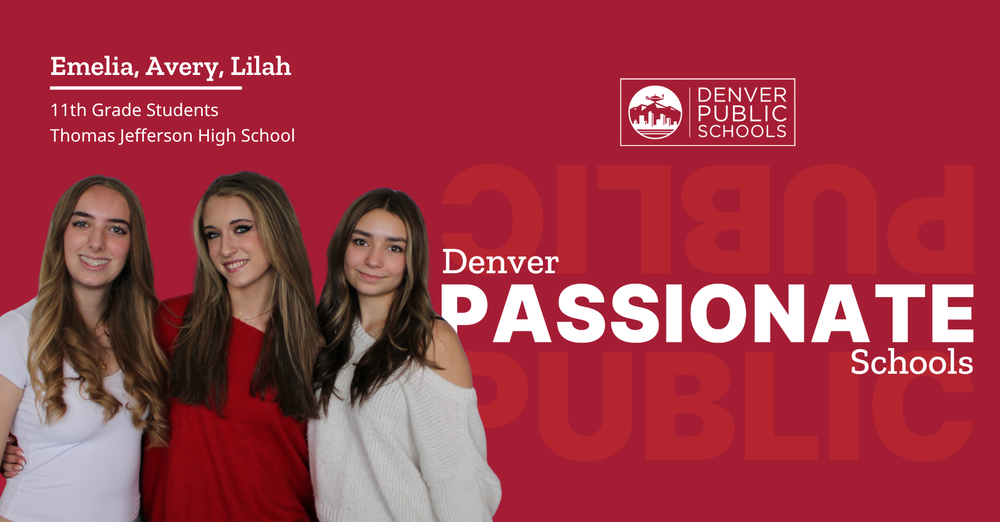
Colorado ranks third in the nation for fentanyl overdose rates. For Emelia Talbert, Avery Fowler, and Lilah Sani, students at Thomas Jefferson High School, that number hit close to home. With members of their own community already touched by the crisis, the three were determined to cut through the confusion and silence surrounding it. What began as an awareness campaign project for their DECA class, grew into something much larger.
"We're trying to reach a community that doesn't know much about a serious issue," Avery said. "Our shared goal was how much we were going to impact students."
Their first step: hosting a screening of Screenagers Under The Influence: Addressing Vaping, Drugs, and Alcohol in the Digital Age, a documentary exploring how the tech revolution has reshaped adolescence and its relationship to substance use. The film debunks myths and offers practical strategies for parents and schools: from setting healthy boundaries to supporting teen mental health and encouraging better decision-making. For Emelia, Avery and Lilah, the screening was the opening move in a larger effort to bring prevention education directly to their peers.
When they presented the event's impact at the state DECA competition, leaders from the Maddie Wright Foundation took notice. Inspired by the students' passion and expertise, the Foundation invited them to collaborate. The group took their work beyond the school auditorium and into the broader Denver community through outreach at farmer's markets and other local gathering spaces.
"Half the battle is getting the Narcan in people's hands," Lilah said, "but the other half is beating the misconceptions. It's really important we get to students first because they're willing to hear it, especially when it comes from a place of non-judgment."
That peer-to-peer approach has proven remarkably effective. "A lot of students felt like they could actually understand the information better, or actually wanted the information, because it was coming from other students," Lilah said.
The biggest misconception they encounter is that fentanyl use is a choice. "The emerging demographic of people dying from fentanyl are people trying drugs for the first time," Emelia said. They're equally insistent on reframing naloxone: "It doesn't mean you are using drugs. It's a first aid device — you use it to help others."
Emelia, Avery and Lilah hope this work takes root at Thomas Jefferson and spreads to high schools across Denver Public Schools and beyond. As they each take their next steps, they carry a clear call to action: for DPS, other school districts and Colorado at large to make substance use prevention a priority in curriculum, policy and the community.