
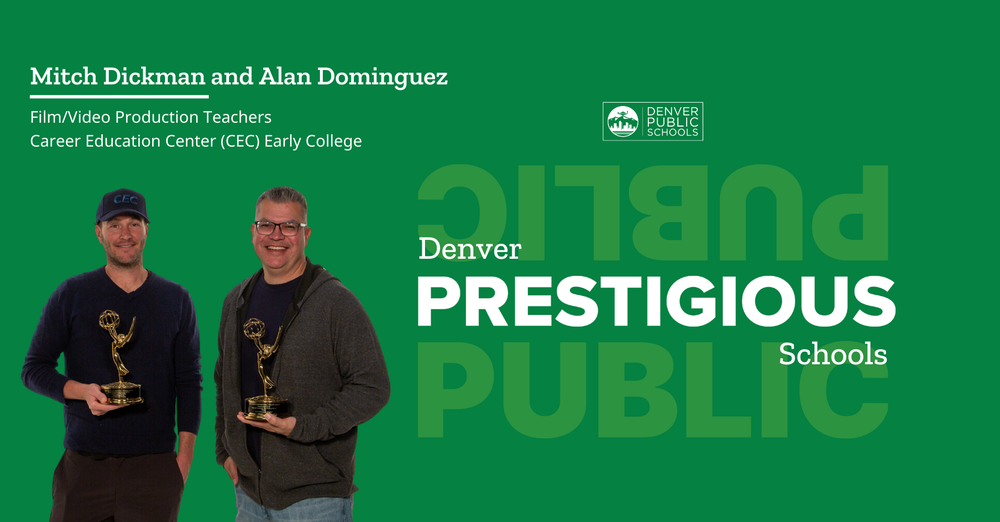
At Career Education Center (CEC) Early College, the film program goes beyond technical skills — it’s reshaping how students see success in education. Led by Emmy Award-winning filmmakers Alan Dominguez and Mitch Dickman, the program has earned recognition inside and outside of the classroom. But for these educators, success isn’t measured by trophies; it’s about impact: creating opportunities for students to tell their stories and see themselves as capable, creative voices in a professional world.
“I don’t make films to win awards,” Alan explained. “I make films because I have a need to create and communicate with an audience. Recognition raises our program’s profile and credibility, but the real reward is representing our students and community well.”
That philosophy drives the program. Students aren’t just learning how to shoot and edit, they’re discovering the power of storytelling.
“Prestige for them isn’t confined to accolades; it’s about breaking through classroom walls,” Mitch said. “When their work gets out into the world, showcased at film festivals alongside other DPS schools and reaches real audiences, that’s when it comes full circle.”
What Makes the CEC Film Program Stand Out?
It starts with the students. Many come from backgrounds where storytelling isn’t seen as a career path. At CEC, they gain access to industry-standard cameras and editing software that is used by professionals, but the magic happens when they take ownership of their stories.
“We dig deep into who they are and what story they want to tell,” Mitch said. “There was one project that was deeply personal for a student, and expressing that narrative through film was powerful. Learning to balance personal voice with professional tools is what makes this program unique.”
Alan agrees that creative breakthrough moments are among the most powerful moments for his students.
“The most rewarding moments are when students take creative risks, like making a silent film, documentary, or something they never imagined,” Alan said. “That shows growth. I don’t assign those projects; they choose to push themselves and take that leap on their own.”
Preparing Students for the Future
Learning doesn’t stop in the classroom. Field trips and internships connect students directly to the industry. Mitch has seen how meaningful authentic experiences can be.
“One of our students filmed a premiere on their own after completing a two-year internship,” Mitch said. “The client immediately followed up and said they’d hire them again. That kind of endorsement validates everything we’re doing.”
These experiences prepare students for college, careers, and leadership roles in creative industries, building professionalism and confidence along the way.
A Safe Space for Creativity
The heart of the program is creating a space where students feel free to experiment.
“When students reinterpret or break the rules of filmmaking in a safe environment, that’s when innovation happens. There’s no judgment here, just support for creating something unique,” Alan said.
That ethos has helped CEC’s film program build an outstanding reputation. It goes beyond teaching film — it’s about helping students see themselves as storytellers shaping culture and conversation.
Alan and Mitch lead by example, continuing their own creative work outside of the classroom and championing opportunities for students. Their passion for storytelling and commitment to student success make CEC’s film program a beacon of opportunity where prestige isn’t simply defined by awards, but by the voices it amplifies.